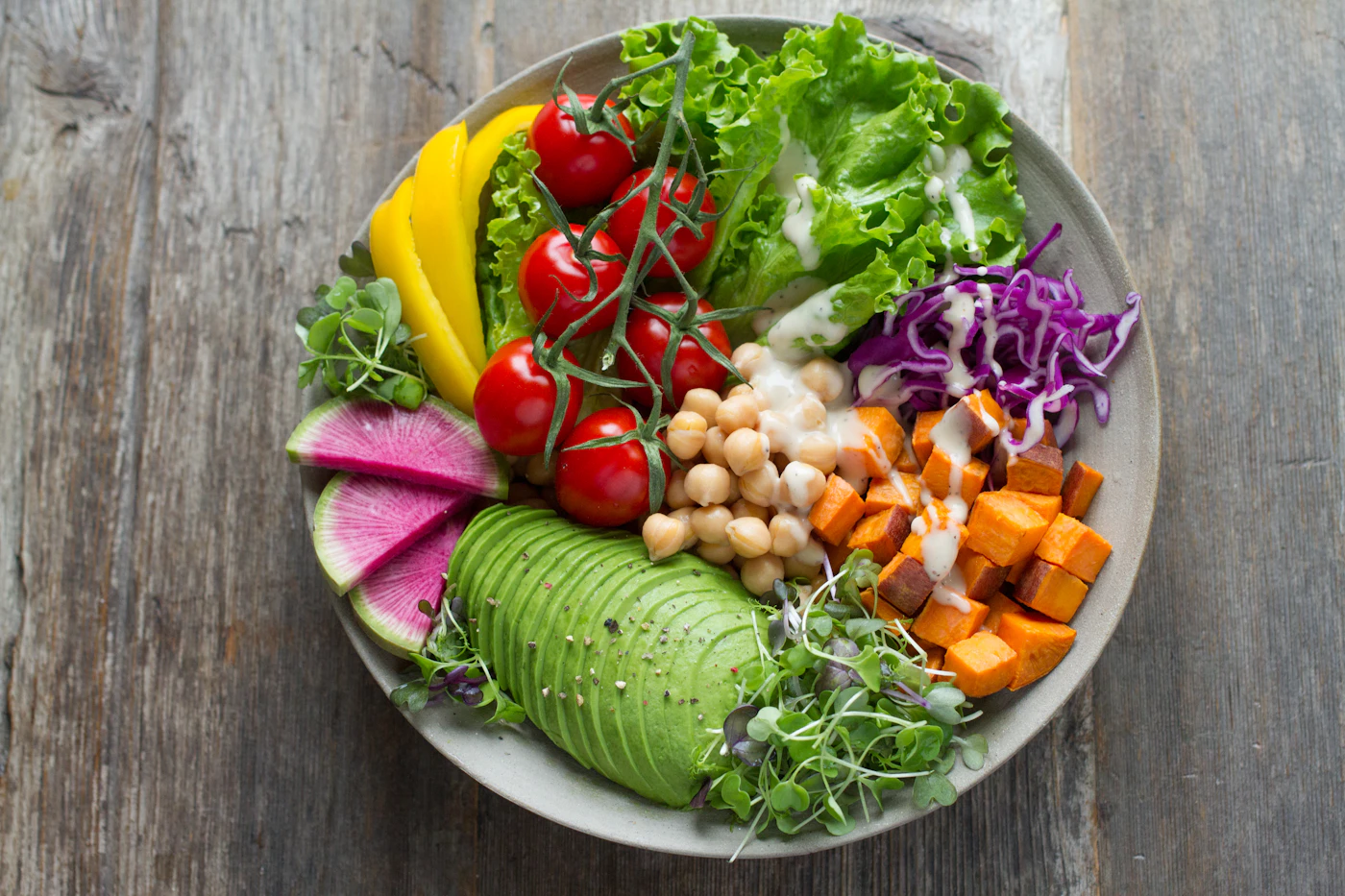
In most offices the plant based option is an apology. One tray, cooked last, chosen by nobody who had an alternative. That is not a limitation of plant based cooking, it is a limitation of how it gets ordered and prepared. Done properly, the vegetarian dish is the one that runs out first, including among the people who eat meat every day.
The Problem Is Not the Ingredients, It Is the Effort
Grilled vegetables with rice is not a meal, it is a side dish that lost its main. Legumes, grains, vegetables and good fats can carry a plate easily, but they need seasoning, texture and technique, because there is no fat from meat quietly doing the work in the background. Plant based food is unforgiving of laziness, which is why it is so often bad, and why it is genuinely excellent when a kitchen actually tries.
Protein, and Where It Comes From
The most common failure in a vegetarian office lunch is that it contains no meaningful protein, so people are hungry ninety minutes later and conclude that the food was not filling. Beans, lentils, chickpeas, tofu, seeds and nuts do the job, and for vegetarians eggs and dairy make it simpler still. The point is that the protein has to be planned rather than left to chance. Our piece on nutrient dense ingredients goes through the basics.

The Serbian Season Is Unusually Good at This
This is one area where cooking here has an advantage rather than a handicap. Beans and lentils, roasted peppers, zucchini, cabbage, tomatoes at their peak, good sunflower and olive oil. A plant forward menu built from what grows nearby is cheaper, tastes better, and needs no imported novelty products with long ingredient lists. It is also more familiar to the room than an imported vegan concept, which matters more than it probably should. Our article on sustainable catering covers how seasonal sourcing works in practice.
Vegan, Vegetarian and No Meat Are Three Different Things
A surprising amount of trouble comes from vocabulary. Vegetarian food can contain eggs, dairy and honey. Vegan food cannot, and that includes butter in a sauce, cheese scattered on a salad, and stock in a soup. Someone avoiding red meat is a fourth case entirely. When you order, say which one you mean, and when the food arrives, expect it to be labelled clearly enough that nobody has to interrogate a colleague about the sauce.
How Many Portions to Order
Ordering exactly the number of declared vegetarians is the standard mistake. Good plant based dishes get eaten by everyone, so if you order six portions for six people, several of them will find the tray empty. Order a margin, and treat plant based dishes as part of the main menu rather than a separate track. The opposite problem, ordering plant based food that nobody touches, is almost always a quality problem rather than a demand problem.
Cross Contamination and the Line in the Kitchen
For a preference, a shared pan is a small matter. For an allergy or a religious restriction it is not. A kitchen that takes this seriously separates boards, tools and preparation order, and does not finish a vegan dish with the same tongs it just used on chicken. If this matters in your company, ask how it is handled instead of assuming. We wrote about how a professional kitchen manages exactly this in our article on allergies and special diets.
"The measure of a vegetarian menu is not whether vegetarians accept it. It is whether everyone else asks for it."
Does It Cost Less
The ingredients usually cost less, but the labour does not. Legumes need soaking and long cooking, vegetables need a great deal of cutting, and a plant based dish takes more seasoning steps to arrive at the same place. So a well made vegetarian menu is often slightly cheaper than a meat one, and rarely dramatically so. If a quote for plant based catering is far below everything else, the saving is coming from somewhere, and it is usually coming from effort.
A Menu That Works for a Mixed Room
The practical target for most companies is not a fully vegan menu, it is a menu where the plant based part of the table is genuinely good and generous. In our experience that means one substantial plant based main instead of three token salads, legumes as a real component rather than a garnish, a grain that has been cooked with attention, and a sauce or dressing that pulls the plate together. A room fed like that stops noticing which dishes are the vegetarian ones, which is the whole point.
The Bottom Line
Plant based catering fails when it is treated as a compliance exercise and succeeds when it is treated as cooking. If your company has been ordering one lonely vegetarian tray out of politeness, the problem is probably not that your team dislikes vegetables. Tell us what your team looks like and we will build a menu where the plant based food is not the compromise.


