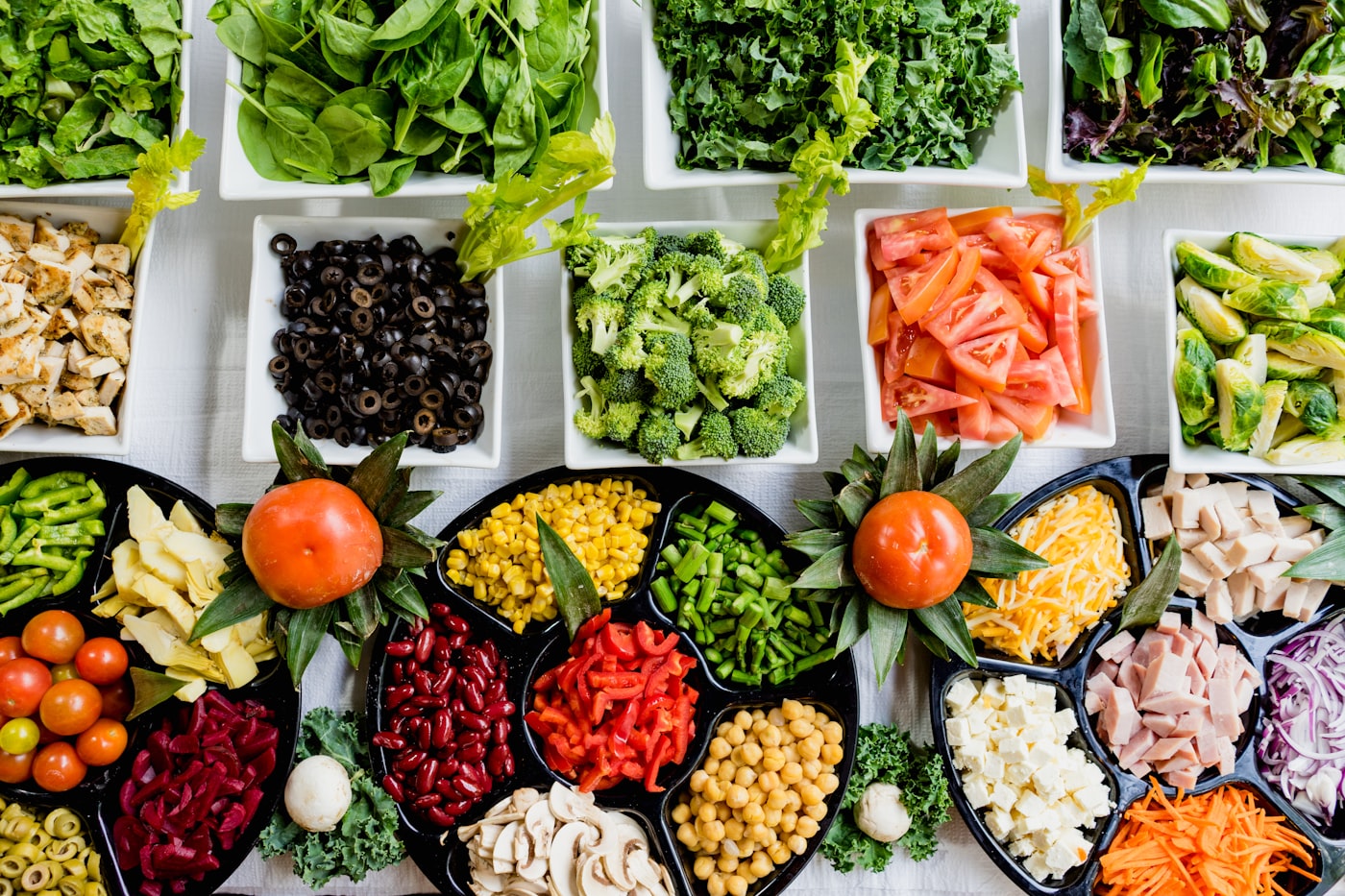
The Mediterranean diet has been studied more thoroughly than almost any other way of eating, and it keeps coming out well. That alone would make it interesting. What makes it genuinely useful for a catering company is something less discussed: it is also one of the few healthy eating patterns that actually survives being cooked for sixty people and delivered across a city.
What It Actually Is
It is not a diet in the sense of restriction, and it is not just olive oil. The pattern is simple. Vegetables, fruit, legumes, whole grains, nuts, and seeds do the heavy lifting. Olive oil is the main fat. Fish appears regularly, poultry and dairy moderately, red meat rarely. Meals are cooked simply, eaten slowly, and usually shared. Nothing is banned, the proportions are just different from what most offices eat by default.
That last point is the whole thing. It is a shift in emphasis rather than a list of forbidden foods, which is exactly why people can eat this way for years instead of abandoning it in February.
Why It Fits Corporate Catering So Well
It Satisfies Without Sedating
This is the practical argument that matters most to a company. Mediterranean food is generous and filling, but it is not heavy in the way that flattens a team after lunch. Fiber, good fats, and moderate portions of protein keep energy steady, so the afternoon carries on rather than grinding to a halt.
It Scales
Roasted vegetables, grain salads, legume dishes, and baked fish all travel well, hold their quality on a buffet, and taste as good at room temperature as they do hot. A great many restaurant dishes simply cannot survive the trip from kitchen to office. Mediterranean food is built out of things that can.
It Includes Everyone by Default
Because the base of the food is plants, grains, and legumes, a Mediterranean menu accommodates vegetarians and vegans without inventing a separate sad plate for them. Gluten free is straightforward when the base is already often rice, buckwheat, or potato. Instead of building a main menu and then bolting on exceptions, you build one menu that most people can eat from.
"It is the rare menu where the healthy option, the popular option, and the practical option are all the same option."

The Serbian Advantage
There is a quiet irony here. Serbia is not on the Mediterranean, but Serbian produce is almost perfectly suited to it. Our tomatoes, peppers, aubergine, courgette, onions, garlic, and herbs are the same raw material the pattern is built on, and in summer they are as good as anywhere. Beans and lentils are already deep in the national cooking tradition. Sunflower and pumpkin seeds, walnuts, and honey are all local.
In practice, a Mediterranean corporate menu here is not an imported concept that has to be flown in. It is mostly a matter of rebalancing what is already grown nearby: more vegetables and legumes at the centre, olive oil instead of heavy fats, fish more often, red meat less often. The ingredients are local. Only the proportions change.
Building the Menu
A working Mediterranean rotation for an office looks roughly like this. A grain or legume base, barley, buckwheat, chickpeas, white beans. A protein that changes through the week, baked fish twice, poultry once, and a purely plant based day that nobody notices is meatless because it is good. Vegetables in volume, roasted, grilled, or fresh. Olive oil, lemon, garlic, and herbs doing the seasoning instead of heavy sauces. Fruit and nuts rather than a dessert that undoes the meal.
The pattern is flexible enough to run for months without repetition, which matters more than any single dish. Catering is judged over a quarter, not over one lunch.
The Honest Caveat
One thing worth saying plainly, because it usually is not. Calling a menu Mediterranean does not make it healthy. Pizza and fried calamari are also Mediterranean in a geographic sense. The benefit comes from the actual pattern, plants at the centre, good fat, fish, simple cooking, and not from the word on the menu. It is easy to sell the label and skip the substance, and plenty of caterers do.
The Bottom Line
The Mediterranean pattern gives a company food that is good for people, food that people actually want to eat, and food that survives being catered. That combination is rarer than it sounds. Most healthy menus fail on the second point and most popular menus fail on the first.
At Swastha Catering, this pattern is the backbone of how we cook, built on Serbian produce and adjusted to the season. Tell us how your team eats now and we will show you what the same week could look like.


