
It is two o'clock in the afternoon. The meeting room is quiet in the wrong way. People are reading the same paragraph twice, replies are getting shorter, and someone is quietly considering a third coffee. This is not a motivation problem and it is not a personality flaw spread evenly across an entire team. Most of the time, it is lunch.
What Actually Happens After Lunch
Part of the afternoon dip is simply human. The body has a natural low point in the early afternoon, and it arrives whether you eat or not. What food decides is the size of that dip. A meal built mostly on refined carbohydrates, white bread, pastry, something fried, and a sweet drink, pushes blood sugar up quickly and then lets it fall just as quickly. The fall is what you feel at your desk: heaviness, poor concentration, and a craving for something sweet.
The opposite mistake is just as common. Skipping lunch, or eating something tiny because the day is busy, produces its own crash. Energy runs out, focus goes with it, and by four o'clock the vending machine wins. The goal is not to eat less. The goal is to eat something built differently.
The Three Things That Actually Matter
Protein Has to Be There
Protein slows down digestion, flattens the blood sugar curve, and keeps you full for hours rather than minutes. It also supports the alertness side of brain chemistry, which is exactly what an afternoon of work asks for. In practice this means a real portion of fish, chicken, eggs, legumes, tofu, or yogurt, not a slice of something hiding in a sandwich.
Vegetables Are the Base, Not the Decoration
Fiber is the quiet hero of a working lunch. It slows the absorption of sugars, adds volume without heaviness, and keeps digestion steady. A useful rule is that vegetables should cover about half the plate, and that grains should be whole rather than refined wherever possible. Barley, buckwheat, quinoa, and brown rice all behave very differently from white bread.
Enough Fat to Satisfy, Not Enough to Sink You
Olive oil, nuts, seeds, and avocado make a meal satisfying and help it last. The problem is never fat by itself, it is the classic combination of heavy fat with refined carbohydrates, which is the single most reliable way to flatten a team for two hours.
"The afternoon slump is rarely a discipline problem. It is usually a lunch that was designed, by accident, to cause it."
The Portion Question
Size matters as much as composition. A very large meal pulls the body toward digestion and rest, which is pleasant on a Sunday and expensive on a Tuesday. A moderate lunch followed by a proper afternoon snack, fruit with nuts, or yogurt, tends to hold energy far better than one enormous plate at one o'clock. People often discover they were not lacking willpower at four in the afternoon, they were simply lacking a plan.
What This Looks Like on a Real Plate
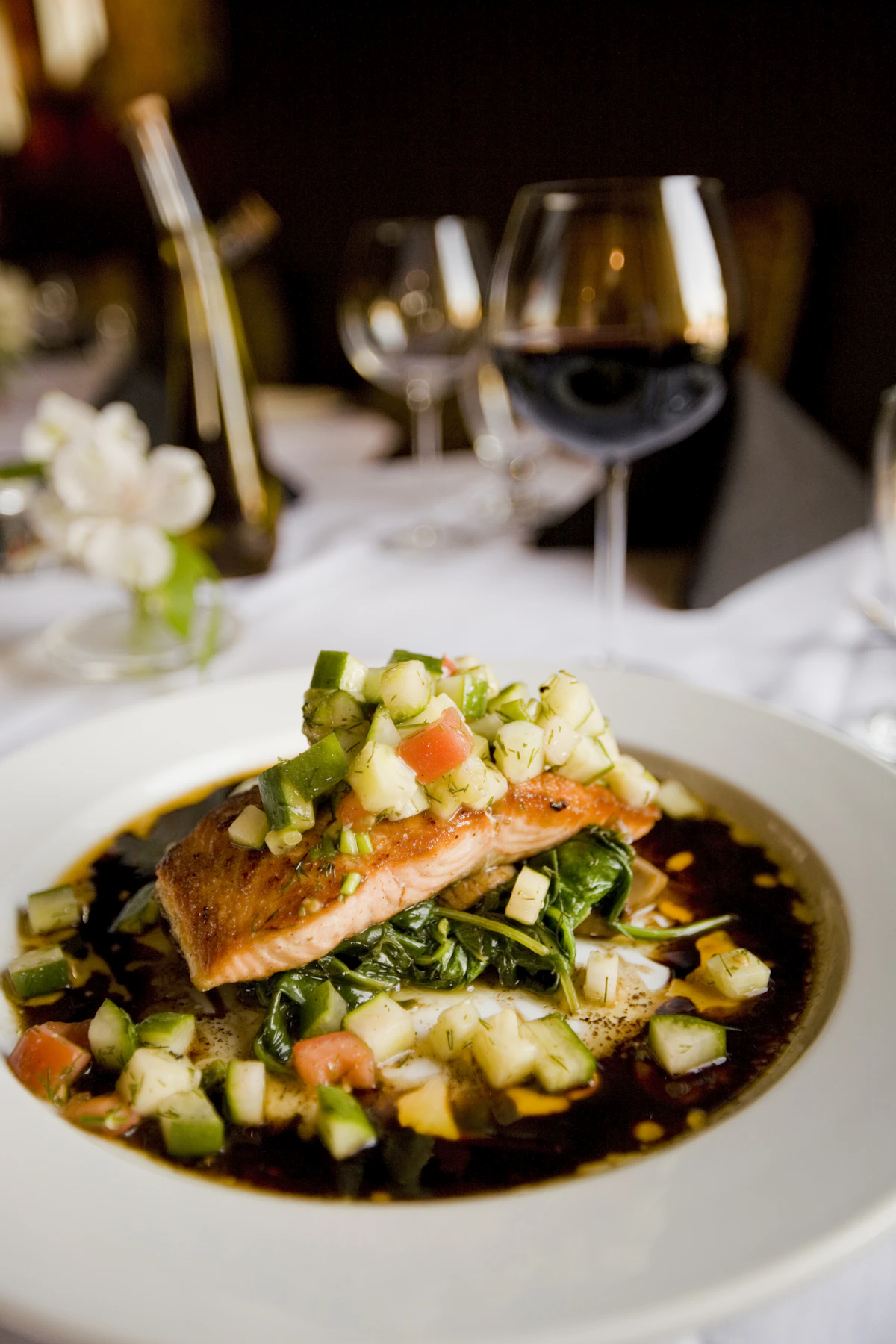
Grilled fish with roasted seasonal vegetables and barley. A bowl of chicken and legumes over greens with an olive oil dressing. A lentil stew with a fresh salad and a slice of whole grain bread. None of this is exotic and none of it is punishing. Compare it with the standard version of a rushed office lunch, a white bread sandwich, something from a bakery, and a sugary drink, and the difference in how the next three hours feel is not subtle.
Timing, Coffee, and Water
Eating in front of a screen while still working tends to produce a worse meal, eaten faster, followed by more snacking later. Twenty minutes away from the desk is not lost time, it is the cheapest part of the fix. Coffee after lunch masks the dip rather than removing it, and taken too late it damages the sleep that decides how tomorrow will go. Water matters more than people expect, because mild dehydration alone is enough to reduce concentration.
Why This Is a Company Problem, Not a Personal One
If the food available around the office is heavy and refined, then the afternoon is compromised for the whole team, and the company is paying for those hours either way. This is what makes catering a productivity decision rather than a perk. When the default option on the table is balanced, nobody needs willpower to choose well, they just eat what is there and the afternoon holds.
The Bottom Line
You cannot delete the natural early afternoon dip, but you can decide whether it is a small dip or a wall. Protein present, vegetables as the base, whole grains instead of refined ones, a moderate portion, and enough water. That is the entire recipe, and it changes the second half of the working day.
At Swastha Catering, we build business lunches around exactly this logic, meals that leave your team clear and steady rather than heavy and slow. Tell us how your day is structured, and we will build the menu that fits it.


