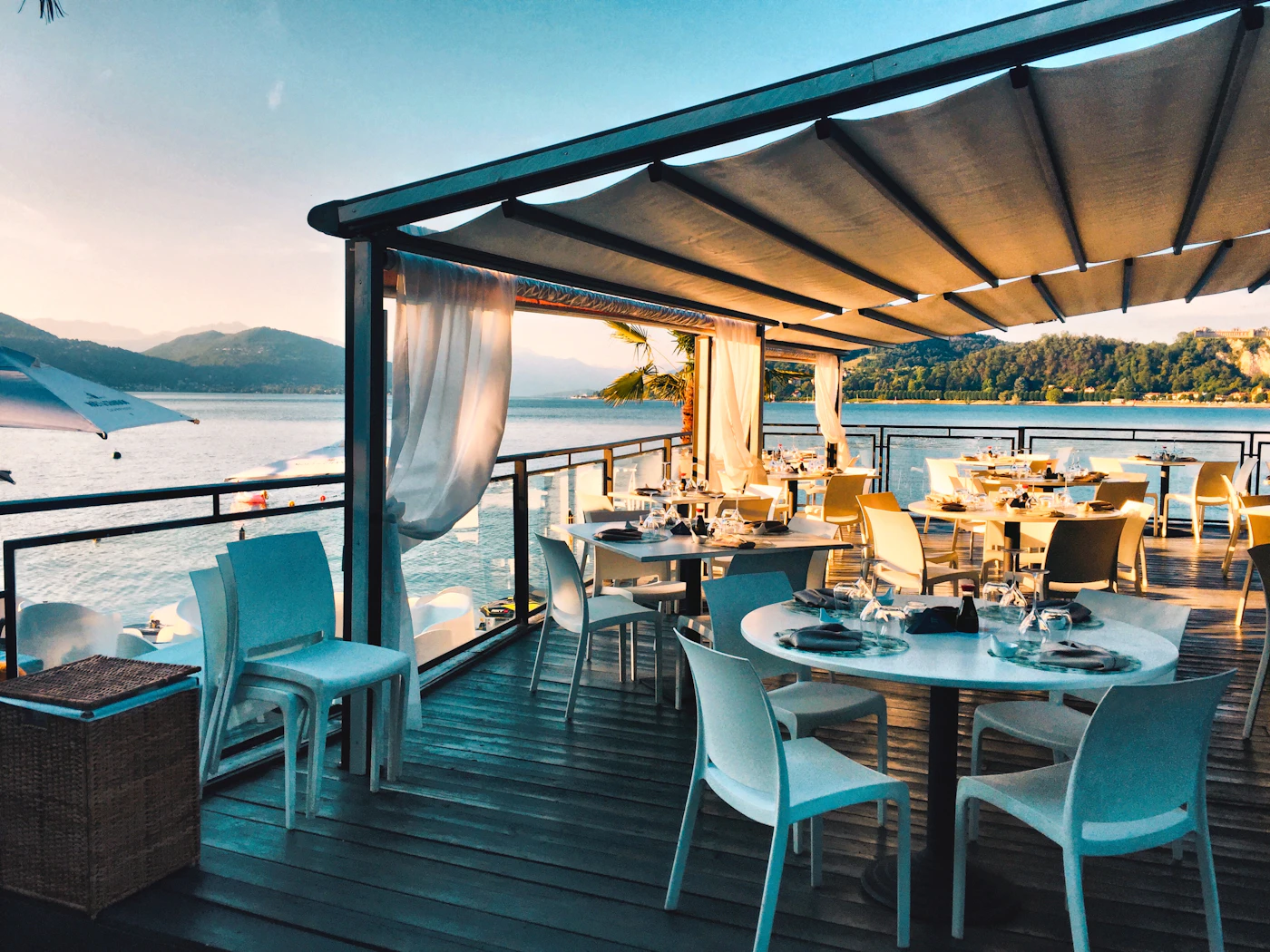
A corporate event is a logistics problem wearing a menu. Food is the part everyone remembers, but almost every catering failure at an event comes from something else: the wrong timing, the wrong format, or a room with nowhere to put a plate down. Here is how we think about the three formats Belgrade companies actually book, and what decides whether the food supports the event or interrupts it.
Conferences and Seminars: the Coffee Break Runs the Schedule
At a conference, food is a timekeeping instrument. A coffee break that takes too long to serve destroys the agenda, and a break that is too small sends everyone out of the building to look for something else. What works is food that can be handled standing, with one hand, laid out at more than one station so a queue never forms, and in enough quantity that people stop thinking about lunch at eleven in the morning. Coffee should be continuous rather than a single pot that dies in ten minutes.
Lunch at an All Day Event
The classic mistake at full day events is feeding people as though the day is over. Serve a heavy lunch at one o'clock and the room afterwards is visibly slower, questions stop, and the final session is lost. Lunch in the middle of a working day should be lighter than instinct suggests: proper protein, vegetables, one grain, and dessert kept small. We went through the mechanics of this in our piece on the afternoon energy crash.

Team Buildings and Offsites: Cooking Far From a Kitchen
Offsite catering is mostly a transport question. The moment you leave the office you lose ovens, refrigeration, running water, and often shade. That does not have to lower the quality, but it does change what belongs on the menu: dishes that hold their temperature and texture, packaging designed for travel, and equipment brought along rather than assumed to be there. Ask a caterer what their plan is if the location has no power. The answer tells you immediately whether they have done it before.
Company Celebrations: Standing Food, Real Food
Anniversaries, launches and end of year parties are eaten standing, usually with a glass already in one hand. Everything has to work with one hand and without a knife. That is a genuine constraint on cooking, and it is where most celebration catering quietly gives up and puts out the same three cold platters. It does not have to be that way, but the menu has to be designed for the posture people will be in, not adapted from a seated one at the last minute.
How Much Food, and for How Many
Quantity at an event is not headcount multiplied by an appetite. It depends on the hour, the length of the event, whether alcohol is served, and whether people are arriving straight from a working day. An evening reception after work consumes far more than the same reception in the afternoon. The safer approach is to fix the format around the time of day first and decide quantity second. And always plan for the people who cannot eat what most of the room eats, because in a group of fifty there are always several of them.
The Boring Details That Decide the Evening
Where the van can stop and how the food gets from it into the room. Whether there is a table near a socket for warmers. Where used plates go. Whether guests have anywhere at all to set a glass down. Who clears at the end, and at what hour. None of this appears on a menu and all of it is what people actually feel. A caterer who asks to see the space before a large event is not being difficult, they are removing the most likely reasons the evening goes wrong.
"Nobody remembers the menu at a well organised event. Everybody remembers the queue at a badly organised one."
Dietary Needs at Scale
At fifty guests you can safely assume vegetarians, at least one serious allergy, and several people avoiding something for medical or religious reasons. Handled well, none of this is visible: enough plant based food that it is not a lonely separate tray, clear labels on everything, and separated preparation where it genuinely matters. Handled badly, a number of your guests eat bread and go home hungry. Our article on allergies and special diets explains how a professional kitchen keeps this safe.
What to Ask Before You Book
Have you worked in this venue, or in this kind of space? What is included, and what will appear later as an extra? How many staff will be on site, and until what time? What is the deadline for changing the number of guests? What is the plan if the delivery is delayed, or if the weather ends an outdoor plan? Specific answers are a good sign. Vague answers are a preview of the event itself.
The Bottom Line
Event catering succeeds or fails on the parts nobody photographs: timing, flow, packaging, staff, and knowing the room. Get those right and the menu is finally free to do its job. Swastha caters conferences, team buildings and celebrations across Belgrade, indoors and outdoors. Tell us the date, the place and the number of people, and we will tell you honestly what will work there.


